Site Title Goes Here

Shortcut Navigation:

REDUCE YOUR RISK

Download All Tip Cards

Print and share our tips for safer choices at home, outside and in the beauty aisle.

LEARN MORE >

VICTORIES

Johnson & Johnson
J&J Commits to Safer Cosmetics Worldwide

Johnson & Johnson to phase out chemicals of concern from baby and adult cosmetics by 2015.

LEARN MORE >

STRONG VOICES

Jeff Cresswell and Michelle Kalberer

Co-owners of the stainless steel bottle company Klean Kanteen, Jeff and Michelle were honored with a 2010 Breast Cancer Fund Hero Award.

LEARN MORE >
Printer Friendly

The Backstory on BPA

Bisphenol A (BPA) was considered for use as a synthetic estrogen before scientists discovered it could be useful in making plastics and resins. Its shift in application, however, didn't change its estrogen-like properties.

Today BPA is one of the most widely produced chemicals in the world, used in hard plastic bottles and dishware, drink cans, receipts, dental sealants and more.

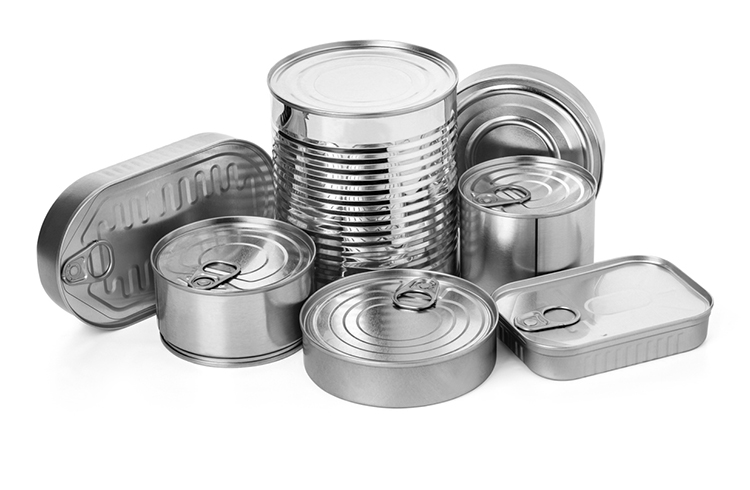
But where it really stands out is food cans, which are usually lined with BPA.

Research suggests that food is the primary BPA exposure source for Americans and that BPA leaches from the can into the food, especially food that's high in fat, salt, acid or all three.

CLEAR SCIENCE

How does BPA increase breast cancer risk? Learn the science behind this estrogenic chemical.

Chemical facts: BPA >

Exposure to BPA not only may elevate breast cancer risk, but also may interfere with chemotherapy treatment for the disease.

BPA in Cans and People
Alternatives
Market Action
Congressional Action
Other Government Action

Why BPA Is in Cans, and How It Ends Up in Us

Food cans are lined with an epoxy resin that contains BPA. This lining forms a barrier between the metal and the food, which helps create a tight seal so that the food is safe from bacterial contamination.

But while BPA-based epoxy resins solve one food-safety problem, they unfortunately create another, as BPA can leach from the resin and make its way into food. This is problematic because BPA is an estrogenic chemical, and laboratory studies show that it is linked to breast cancer and an array of other health concerns.

Why does BPA leach from the epoxy-resin can liner? The most common epoxy resin used in food cans is formed by binding two chemicals, BPA and epichlorohydrin. When these two molecules bind, the resulting copolymer can be incomplete and unstable, allowing BPA to migrate from the liner into food. BPA (and its chemical derivative bisphenol A diglycidyl ether) tends to leach more when heated. And because BPA is lipophilic, or fat-seeking, it tends to leach more into fatty foods.

Alternatives

Can manufacturers are beginning to use alternative liners to BPA in cans. Any alternatives to BPA, however, must be studied for their effects on health—switching out a chemical we know is harmful for one that's unknown and untested is just kicking the can down the road.

Market Action

As shoppers we have a right to know what's in the food we buy. That's why the Breast Cancer Fund launched the Cans Not Cancer campaign, aimed at convincing manufacturers to replace BPA in canned food with a safe alternative and to tell the public about their changes.

In its short history, the Cans Not Cancer campaign has educated thousands of advocates, directed 70,000 messages to leading canned food makers, revealed the presence of BPA in classic kids' foods and Thanksgiving staples, and secured promises from manufacturers to move away from BPA.

We're proud to say that many canned food makers, including industry leader Campbell's, are phasing out BPA. Problem solved? Not exactly. Most of these companies aren't telling us what they're using instead of BPA, and we have concerns about the alternatives.

Congressional Action

Thanks to growing public concern over the use of BPA in food cans, as well as mounting scientific evidence about its health risks, legislators are stepping in to do something about it in order to protect all Americans.

The Breast Cancer Fund has been a leader in the push for BPA-free food. In January 2011, we joined Rep. Ed Markey, D-Mass., in heralding the re-introduction of his legislation to ban BPA from all food and beverage containers.

Because BPA is of particular concern for young children, Sen. Dianne Feinstein (D-Calif.) has introduced—and we support—a bill that would protect kids from BPA in baby bottles, sippy cups and infant formula and baby food packaging.

Other Government Action

Because of the health concerns about BPA, which include breast and prostate cancer as well as obesity, early puberty, cardiac disease and lowered sperm counts, even at the low levels found in most people, Canada has declared BPA to be a toxic substance.

The U.S. National Toxicology Program registered "some concern" about the chemical in 2010, though no U.S. agency has yet taken action to limit exposure. However, 11 U.S. states have banned the use of BPA in infant feeding products and over 30 states have considered such measures. In addition, Maine, Minnesota and Washington have listed BPA as a chemical of concern.