Protecting Kids from BPA
The estrogenic chemical bisphenol A (BPA) is used in products as diverse as receipts and dental sealants.
But it may be most problematic in the daily lives of babies, who can be exposed through older baby bottles, sippy cups, the lids of baby food jars and canned ready-to-feed formula.
That's a lot of BPA for a small body, especially because early-life exposures are critical to later-life breast cancer risk.
Breast cancer isn't the only worry: BPA is also linked to prostate cancer, obesity, early puberty, cardiac disease and lowered sperm counts, even at low levels.
Senate Action
BPA is a problem for Americans of all ages, but babies are especially vulnerable. That's why legislators—and the Breast Cancer Fund—have fast-tracked efforts to get BPA out of young kids' products.
In 2011, Sen. Dianne Feinstein (D-Calif.) introduced the Ban Poisonous Additives Act of 2011 (S136), which would have banned BPA from baby bottles, sippy cups, infant formula and baby food.
In 2012 the FDA banned BPA from baby bottles and sippy cups, although this was largely a formality, as manufacturers had already moved away from the chemical.
BPA is used to package food for adults, too. That's why we also support Rep. Edward Markey's (D-Mass.) efforts to eliminate BPA from all food and drink containers. Rep. Markey continued to champion children's health when in 2012 he sent three petitions to the FDA requesting that the agency permanently ban BPA from infant formula, baby food, reusable food and beverage containers, and canned food and beverages. These petitions are still under consideration and generated letters of support from tens of thousands of supporters of the Breast Cancer Fund and our nonprofit colleagues.
CLEAR SCIENCE
Age matters: Learn the three windows of exposure critical to breast cancer risk.
Timing of exposure >State Action
In 2013, 12 states introduced legislation either banning or requiring the labeling of BPA in food packaging, while another three states considered bills banning BPA in kids' products. Since 2009, 11 states and several localities have restricted the use of BPA in baby products including bottles, cups, pacifiers, infant formula and baby food.
Also in 2013, California's Office of Environmental Health Hazard Assessment announced its intention to add BPA to California's influential Proposition 65 list of "chemicals known to cause cancer or birth defects or other reproductive harm."
Industry Opposition
The chemical industry has spent millions of dollars defending BPA and opposing federal and state attempts to regulate the chemical. Trade associations representing food manufacturers and can manufacturers have joined the chemical industry in opposition to restricting BPA use.
Markets Are Moving
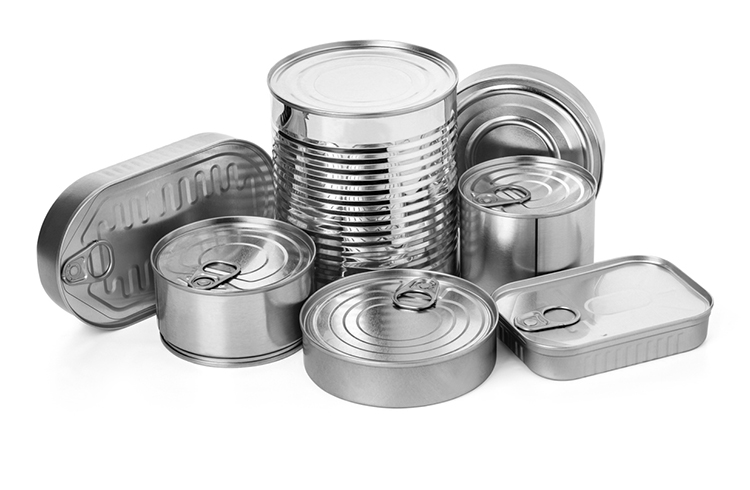
BPA-free packaging alternatives exist and have been put to use—thanks to consumer demand—by leading manufacturers of baby bottles, infant formula and even some canned food.
The key with alternatives is that they really need to be safer—which means more rigorous testing than the law now requires. For now, glass and stainless steel continue to be the safest options for bottles. Research on the safest alternatives for canned food is still evolving.
Other Government Action
With the most vulnerable populations in mind and backed by scientific studies, countries around the world are calling for bans on BPA.
Canada announced in April 2008 that it would ban BPA in baby bottles and restrict its use in infant formula cans. Since then, Belgium and Denmark have banned BPA from all infant feeding and food packaging. France took a bigger step and banned BPA in baby bottles and food packaging for children up to age 3, and Sweden is exploring a broad ban on BPA as well. Even China has promised to ban BPA from baby bottles.
Related Blog Posts
-
05.09.13
Calif. governor proposes reforms to landmark toxics law (Environment & Energy Publishing, 5/8/13)
Reaction to Gov. Jerry Brown's proposed changes to Prop. 65, the state's Safe Drinking Water and Toxic Enforcement Act.
-
04.23.13
American Chemistry Council blocks state scientists from doing their jobs
Just as BPA disrupts our hormones, Big Chem is doing everything it can to disrupt the democratic process, using its money, power and influence to block government action that would protect pregnant women and children. On Friday, shortly after Californiaâs...
-
04.17.13
Will Your Canned Soup Carry a Warning Label? (Rodale, 4/12/2013)
"The Prop 65 listing is yet another indictment of this toxic chemical that industry continues to argue is safe, despite waves of peer-reviewed scientific studies finding that BPA harms reproduction and is linked to breast cancer."
-
02.28.13
Phthalates and BPA make an unexpected appearance
A new study suggests that an individual may not be able to avoid food packaging chemicals like phthalates and BPA by cutting out canned and plastic-wrapped foods.