Site Title Goes Here

Shortcut Navigation:

REDUCE YOUR RISK

Download All Tip Cards

Print and share our tips for safer choices at home, outside and in the beauty aisle.

LEARN MORE >

VICTORIES

Johnson & Johnson
J&J Commits to Safer Cosmetics Worldwide

Johnson & Johnson to phase out chemicals of concern from baby and adult cosmetics by 2015.

LEARN MORE >

STRONG VOICES

Jeff Cresswell and Michelle Kalberer

Co-owners of the stainless steel bottle company Klean Kanteen, Jeff and Michelle were honored with a 2010 Breast Cancer Fund Hero Award.

LEARN MORE >
Printer Friendly

Corporate Positions on BPA

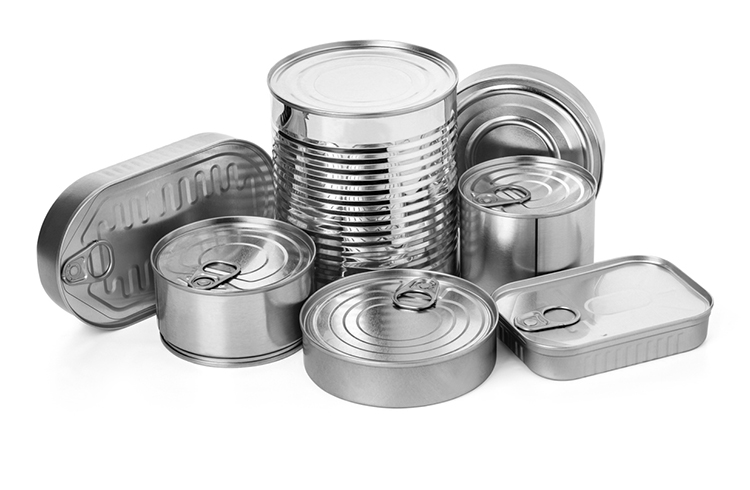
Through the Breast Cancer Fund's communications with canned food manufacturers, in response to inquiries from BPA Act author Rep. Edward Markey (D-Mass.), and in public disclosures made by the companies themselves, we've learned where many food makers stand on the issue of BPA.

We've compiled all the corporate responses and stances on BPA we have to-date so consumers can be as informed as possible about the chemicals in their food and whether or not the makers of their favorite products are taking steps to eliminate BPA.

Abbott Laboratories

(Maker of Similac, Pedialyte and PediaSure infant and baby formulas)

In response to Rep. Markey’s written inquiry about BPA usage, Abbott stated in a letter dated December 9, 2011:

“As of September 11, 2011, all Similac brand infant formula production for the US market is ‘BPA Free’.”

-John C. Landgraf, Vice President, Nutritional Products, Abbott Laboratories

Amy’s Kitchen, Inc.

On May 23, 2012, the San Francisco Chronicle published a press release from Amy's:

“As of March 1, 2012, Amy’s has completely transitioned all of the production of its canned products to a non-BPA liner. … Amy’s has been and is always concerned for the safety and health of its consumers and is very pleased to have developed a new solution.

"'Amy’s has rigorously tested the newest non-BPA can linings and chosen the most safe and effective option available. It is important that consumers understand that BPA is omnipresent in the environment from a multitude of sources. Tests on our canned products with the new liner show extraordinarily low BPA levels of less than 1 part per billion,' said [Amy's Co-Founder Andy] Berliner."

Annie’s Homegrown Inc.

In response to a Breast Cancer Fund written inquiry, Annie’s stated in a letter dated October 4, 2011:

“There are five Annie’s products packed in cans, all of which are pasta products in tomato sauce, that use an epoxy lining that may contain traces of BPA. …

"…We are working diligently with our supply partners to find an alternate packaging option. The can industry is at different stages of a multi-year research and development process to eliminate BPA in cans. Although there has been progress with some types of less acidic canned foods, there is no readily available, FDA-approved alternative for all types of foods.”

-John Foraker, CEO, Annie's

Beech-Nut Nutrition Corporation

In response to Rep. Markey’s written inquiry about BPA usage, Beech-Nut stated in a letter dated January 6, 2012:

“Beech-Nut Nutrition Corporation has shifted away from packaging its baby and toddler foods in food contact articles manufactured with BPA. That transition in packaging was completed in October 2011.”

-James R. Schneider, President/Chief Executive Officer, Beech-Nut Nutrition Corporation

ConAgra Foods Inc.

(Maker of Chef Boyardee, La Choy, Hunt’s, Pam, and Reddi Wip)

In response to a Breast Cancer Fund written inquiry, ConAgra stated in a letter dated May 24, 2011:

“ConAgra Foods is confident in the safety of all of the packaging materials we use for our food products… . ConAgra Foods’ only packaging use involving BPA is in linings of metal cans.

"…ConAgra Foods will continue to closely monitor U.S. and international legislative and regulatory efforts and ensure that our packaging materials remain in compliance with all applicable state, federal or international requirements. …

"…We have begun packaging some tomato products in non-BPA lined cans, and we will continue to evaluate non-BPA liners for the remainder of our canned-product portfolio. In addition, we recently announced implementation of a new can technology for Reddi Wip Dessert Toppings and PAM Cooking Spray that simplifies the aerosol can and no longer requires any epoxy coating.

"…The alternate liners for tomatoes are vinyl; which is approved by FDA and has been used safely and effectively in food packaging for decades. New aerosol cans are lined with polyester resin.”

-Gail Tavill, Vice President, Sustainable Development, Research, Quality & Innovation, ConAgra Foods

Campbell Soup Company

In response to Rep. Markey’s written inquiry about BPA usage, Campbell’s stated in a letter dated March 13, 2012:

“We believe that current can packaging is one of the safest options in the world. However, we recognize that there’s been some debate over the use of BPA. … Because of this, we have begun to discontinue our use of BPA.

"On February 17th, I emailed your office to inform you that we have 'already started using alternatives to BPA in some of our soup packaging, and we’re working to phase out the use of BPA in the linings of all of our canned products.' We do not use BPA in our non-metal packaging. We are committed to completing the transition as soon as feasible, using alternatives to BPA coatings that meet the most rigorous scientific and safety standards that are set by the FDA and to which we have always adhered. This is a complex challenge for the industry, so at this time, we cannot provide a specific date for when the transition will be completed across the portfolio. We are also unable to provide at this time the percentage of our canned products now on store shelves that contain or do not contain BPA.”

-Kelly D. Johnston, Vice President, Government Affairs, Campbell Soup Company

Del Monte Foods

In response to Rep. Markey’s written inquiry about BPA usage, Del Monte stated in a letter dated March 13, 2012:

“For more than 40 years, BPA has been approved by the FDA—as well as other global regulatory agencies—for use in food contact applications, and can coatings containing BPA have played an essential part in food preservation.

"Like most in the industry, the metal cans we use have protective coatings which contain trace amounts of BPA. Our products packed in plastic packaging do not contain BPA… . Del Monte is constantly evolving to meet the needs and preferences of our consumers. In response to growing consumer and customer preference, we are working closely with can manufacturers and suppliers to explore BPA-free can lining alternatives. In fact, we have already transitioned to BPA-free linings for some of our tomato, vegetable and fruit products where the new linings have been proven safe and effective.

"Given the critical safety role that can linings play, any replacement for BPA must first pass rigorous safety and quality testing before we will accept it for use in our products.”

Eden Foods

Eden Foods discloses the following on its website:

“Since April of 1999, EDEN beans have featured a custom made can lined with an oleoresinous c-enamel that does not contain the endocrine disrupter BPA. Oleoresin is a mixture of oil and resin extracted from plants such as pine or balsam fir.

“Although we successfully achieved a BPA free alternative for low-acid food such as beans, the canning industry has no suitable (in our opinion) can for high-acid food like tomatoes. After years of trying to realize one, Eden chose to move its canned tomatoes into amber glass jars to avoid BPA. In 2011 Eden moved a third of its tomatoes to amber glass, away from cans. The cans still have a baked on r-enamel. Due to the acids in tomato, the lining is epoxy based and does contain a minute amount of BPA. It is however in the 'non-detectable' range according to Eden's independent laboratory extraction tests. The test was based on a detection level of 5 ppb (parts per billion). Our goal is zero.

"The inside of the twist caps [for the glass jars] has two coats of sealer between the food and the metal of the cap. The first applied coating has some BPA in it. The second protective sealant over the metal does not contain any, and isolates the first coating from contact with the jar's contents."

General Mills Inc.

(Maker of Cascadian Farm, Muir Glen and Progresso)

In response to a Breast Cancer Fund written inquiry, we learned that General Mills has transitioned to can linings that do not use BPA in its organic Muir Glen tomato products. The company will not, however, share with us what BPA alternative it is using.

General Mills stated in a letter to the Breast Cancer Fund dated April 20, 2011:

"We know that some of our consumers would like us to pursue alternatives—and we are working intensively with our can suppliers and can manufacturers to develop and test linings that do not use BPA.

"Alternatives have not yet been identified for all types of foods, but we are optimistic that new options will be identified in time. When viable alternatives prove safe and effective for other products, we would expect can suppliers and the food industry—in response to consumer interest—to convert to alternative coatings."

-Tom Forsythe, Vice President, Corporate Communications, General Mills

The Hain Celestial Group, Inc.

(Maker of Earth’s Best)

Hain Celestial’s BPA statement to the National Cooperative Grocers Association, dated April 1, 2010, discloses the following:

“The Hain Celestial Group is deeply committed to the health and safety of our consumers, and recognizes and shares the public's concern over the safety of Bisphenol-A (BPA). We have been working toward eliminating BPA from our packaging, although BPA has long been approved for use in the packaging material of packaged food products by international regulatory bodies including the U.S. Food and Drug Administration (FDA) for over 50 years. We are disappointed that the FDA announcement earlier this year failed to provide clearer guidance to industry on the safety of BPA, although it acknowledged concern over BPA exposure in specific population groups and announced plans for further study.

“We therefore continue to vigilantly monitor current and emerging science with regard to availability of alternative materials, as well as all state and federal regulations on BPA, to determine our course of action. This includes the precautionary removal of BPA from our packaging where safe and feasible, and only after confirming that product integrity will not be compromised. In March 2009, we successfully commercialized a BPA-free canister for our Earth’s Best® infant formula.”

-Gerry F. Amantea, Ph.D., Vice President, Technical Services, Hain Celestial Group

H.J. Heinz Company

In response to a Breast Cancer Fund written inquiry, Heinz stated in a letter dated April 15, 2011:

"We intend to replace epoxy linings in all our food containers… . We have prioritized baby foods, due to the sensitivity of use, but are following with adult containers also. In the meantime, we have been working with our can and lacquer suppliers for many years to develop epoxy compounds with very little or no migration, as a stepping stone to a solution.

"…All of our baby food cans in the UK do not use epoxy linings. We have substituted with polyester based systems… .”

-Andy Keatings, Chief Quality Officer, H.J. Heinz Company

In response to Rep. Markey’s written inquiry about BPA usage, Heinz stated in a letter dated March 13, 2012:

“Heinz has been recognized for our leadership in moving to alternative materials that are BPA-free… . Additionally, our can use is very limited and we have been assured by our suppliers that there is no BPA in any plastic containers we use.”

-Michael P. Mullen, Vice President, Corporate and Government Affairs, H.J. Heinz Company

Hormel Foods Corporate Services, LLC

In response to Rep. Markey’s written inquiry about BPA usage, Hormel stated in a letter dated March 12, 2012:

"Although the Food and Drug Administration (FDA), the Japanese National Institute of Advanced Industrial Science and Technology, the European Food Safety Authority and the European Chemical Bureau of the European Union have all approved the use of this compound for food packaging, we are aware that the FDA has recently expressed interest regarding the use of BPA in cans. In response, Hormel Foods is actively exploring alternative can coatings with our suppliers that are BPA-free.

"Validating the safety and functionality of alternative coatings is a very time-consuming process that is dependent upon many factors. Hormel's Research & Development scientists are collaborating with our suppliers to evaluate BPA-free alternatives in a cautious, but deliberate manner. However, to date, we have not qualified any alternative coatings that are 100% BPA-free.

"For more than 60 years, BPA has been used as a component in the containers used to provide our customers the highest level of safe, quality and nutritious foods.”

-Phillip L. Minerich, Vice President, Research and Development, Hormel

Mead Johnson Nutrition

(Maker of Enfamil infant and baby formula)

In response to Rep. Markey’s written inquiry about BPA usage, Mead Johnson stated in a letter:

“…BPA has been safely utilized for decades to enhance the safety and shelf life of a myriad of canned food products. Numerous independent and governmental bodies around the world, including the U.S. Food and Drug Administration, have conducted research and analyses on BPA and concluded that it continues to be safe and suitable for commercial use. However, in response to requests by some of our consumers, Mead Johnson has modified the materials used in our packaging so that BPA is no longer used as a component of such packaging, including the lining.”

-Dirk Hondmann, Ph.D., Senior Vice President, Global Research and Development, Mead Johnson

Nestle Nutrition USA

Based on a letter the Breast Cancer Fund received from Nestle on October 28, 2011, we know the following:

Nestle has a global program to evaluate the most suitable packaging solutions, including alternatives to BPA. They have already moved to non-BPA alternatives for packaging that comes in direct contact with food for all infant foods. They are currently taking steps to eliminate BPA in all direct-contact food packaging. Their alternatives have not been disclosed, but they are assessing alternatives for estrogenic activity.

In response to Rep. Markey’s written inquiry about BPA usage, Nestle stated in a letter dated December 8, 2011:

“Nestle Infant Nutrition has fully implemented packaging made without BPA for our entire Gerber portfolio.

"…Nestle Infant Nutrition/Gerber Products Company does not use packaging made with BPA for any of our infant and toddler products.”

-Marilyn Knox, CEO, Nestle Infant Nutrition, North America

Ocean Spray Cranberries, Inc.

Based on a letter the Breast Cancer Fund received from Ocean Spray on November 10, 2011, we know the following:

Ocean Spray does use BPA in its cans, but independent tests have confirmed that it does not leach into the food.

Pacific Coast Producers

(Maker of canned fruit and tomatoes for various store brands, including Target)

Pacific Coast Producers posted a memo to consumers, dated July 14, 2008, which discloses the following:

“As stated by the [North American Metal Packaging Alliance] on January 25, 2008, independent reviews have concluded that BPA-derived can coatings do not put the public at risk. …

"Our can supplier, Silgan Containers Manufacturing, has informed us that in 2004, the EU set a specific migration limit of 600 parts per billion in food for BPA.  A previous survey indicated that the average value of BPA in canned foods was 37 parts per billion, and a more recent survey averaged 8 parts per billion, well below any established levels of concern.

"In addition, we utilize plastic containers for our fruit bowl and gel production. These containers are not made with any BPA derived formulations, and are BPA free.”

Perrigo Company

(Owner of Perrigo Nutritionals, which makes infant formulas for various store brands)

In response to Rep. Markey’s written inquiry about BPA usage, Perrigo stated in a letter dated December 13, 2011:

“The liners of canned liquid infant formula that Perrigo sells in the United States do not contain BPA; rather, the product is currently packaged in a polypropylene plastic bottle. By way of further response, BPA was a component of the exterior coating for the non-product contact surface of the outer cap used with this plastic bottle. Perrigo and its suppliers previously reformulated the exterior coating for the non-product contact surface of the outer cap to remove BPA. As the U.S. FDA has reviewed and cleared the use of this alternative packaging, Perrigo is transitioning its liquid infant formula products to this improved packaging and expects to complete this transition by the end of 2012.

"The powdered baby formula that Perrigo sells in the United States does not use BPA in the liners. Perrigo does not currently use BPA in the packaging for baby foods in the United States. With respect to toddler foods, Perrigo manufactures soy liquid pediatric nutritional drink that is currently packaged in an aluminum can made with BPA.  However, Perrigo is in the process of transitioning this product into an FDA reviewed and cleared plastic bottle that is not made with BPA.  Perrigo expects to complete this transition by the end of 2012.”

-Joseph C. Papa, President & Chief Executive Officer, Perrigo