

Our Work
Personal Care Products
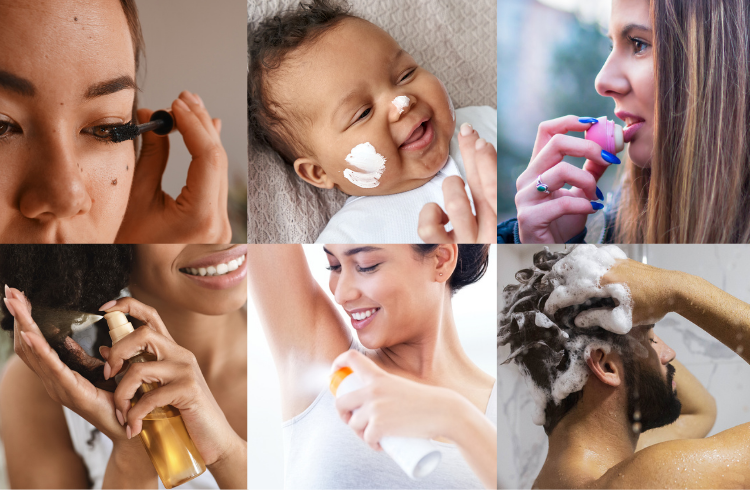
Did you know there are thousands of chemicals in lotion, shampoo, lipstick, and shaving cream? In fact, some contain ingredients linked to breast cancer, infertility, and birth defects.
BCPP’s Campaign for Safe Cosmetics leads the movement to make beauty and personal care products safer for all. Visit SafeCosmetics.org
Science summary
We are all exposed to toxic chemicals through our everyday use of personal care products. Learn about chemicals linked to breast cancer in these products.
Read More
Tips
The word fragrance on a personal care product label can mask countless carcinogens and hormone disrupting chemicals that increase breast cancer risk.
Read More
What’s happening in policy
The $84 billion personal care products industry remains one of the least regulated in the United States. BCPP is vigorously pursuing health-protective cosmetic safety legislation.
U.S. Policy
State Policy
Campaign for Safe Cosmetics
The Campaign for Safe Cosmetics, a program of BCPP, protects people and the planet from toxic chemicals by educating the public; transforming the beauty industry to make products safer; and advocating for health-protective laws that benefit everyone regardless of where they live, work, or shop. As the original trailblazer for safe cosmetics, we focus on eliminating dangerous chemicals linked to cancer and other serious health concerns from beauty and personal care products once and for all.
Visit SafeCosmetics.org
Partners
BCPP’s Campaign for Safe Cosmetics works with non-profits, cosmetic companies, and people like you to clean up the beauty industry.
Our Partners
Alaska Community Action on Toxics, Black Women for Wellness, Breast Cancer Action, California Healthy Nail Salon Collaborative, Center for Environmental Health, Clean Water Action, Keep A Breast and/or Non Toxic Revolution, Learning Disabilities Association of America, Mind the Store, National Caucus of Environmental Legislators, National Hair and Nail Salon Alliance, North Carolina Conservation Network, SAFER States, Savvy Women’s Alliance, Toxic-Free Future, Turning Green, US PIRG, Vermont Conservation Voters, Women for a Healthy Environment, Women’s Voices for the Earth
Get Toxic Chemicals Out of Personal Care Products
Take action now to get toxic chemicals out of our cosmetics and beauty products!
FEATURED VIDEO
BCPP: Exposing the Cause is the Cure
We're preventing breast cancer before it starts by eliminating our exposure to toxic chemicals and radiation.